
In this Article
- Key Takeaways for Launching Your Art Shop
- From Gig Posters to Global E-commerce
- Preparing Your Artwork for Retail
- Building Your Etsy Storefront
- Pricing Your Art for Profitability
- Driving Traffic to Your Shop
- Understanding Platform Limitations
Key Takeaways for Launching Your Art Shop
Opening an online storefront requires more than just uploading a few JPEGs and hoping for the best. Etsy remains a leading e-commerce platform specifically tailored for handmade goods and independent artists. Success requires high-quality digitization of your artwork and a reliable printing process. Proper pricing must account for materials, platform fees, shipping, and your creative time.
Summary: A practical launch window for a first art shop is about 10 to 21 calendar days. Dedicate 2 to 4 days for digitizing and editing, 2 to 5 days for sample printing, 1 to 3 days for packaging tests, 2 to 4 days for listing copy and photos, and 3 to 5 days for announcement content. For a launch checklist dated October 2025, the marketplace fee baseline includes a $0.20 USD listing charge per item, a 4-month listing duration, and a platform transaction fee of 6.5% of the order amount where that public fee schedule applies.
From Gig Posters to Global E-commerce
Distribution choices for independent creators look vastly different today than they did two decades ago. Early illustrators often reached buyers through local music scenes, merchandise tables, and commission work. I often look back at a foundational blog post from my own archives dated 6.23.2007. Back then, artists relied heavily on designing and selling gig posters for events like the Summer 2007 Junior Senior US tour.
Creating fan art or promotional materials for rock bands like Foo Fighters and The Police served as traditional avenues for illustrators trying to build an audience. The workflow was highly physical and localized. You would design the poster, approve a print file, print a small run, and sell at a venue table or through a personal blog. After the show, you hand-packed the remaining inventory.
Today, the internet provides a global merchandise table. You can reach buyers across continents without ever setting foot in a sticky-floored music venue. The challenge has shifted from finding local buyers to standing out in a massive digital marketplace.
Preparing Your Artwork for Retail
Before you even think about sales, you must make critical file-preparation decisions. You need to capture the image, clean the file, proof the colors, and then decide on fulfillment. In collaborative projects, skipping the proofing stage turned out to be the most common stumbling block for new sellers.
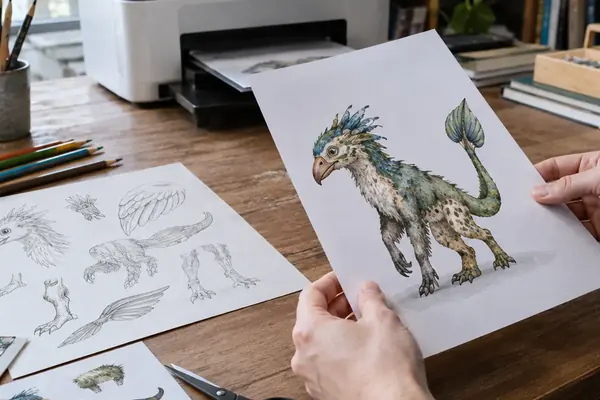
For flat traditional work, scan at 300 ppi at the final print size. Use 600 ppi for ink drawings, line art, or pieces that may be enlarged. Save an untouched master file, then export listing-ready JPEG files separately. If your artwork is too large or textured to scan, photograph it in even daylight or with two matched lights at 45-degree angles. Include a gray card in the first frame, keep the camera square to the art, and crop after lens correction. I often use a Wacom tablet to clean up minor dust spots or color balance issues in the digitized file.

Consider a common failure case: a creator scans a watercolor painting at low resolution, uploads only a digital mockup image, and sells an 11 x 14 inch print. They then discover the physical proof is muddy and soft after the first buyer order arrives. The correct fix is proofing before publication, not apologizing after fulfillment.
Before publishing a print, run at least one physical proof on the intended paper stock during a 2 to 5 business day test period. Check skin tones, dark shadow detail, paper warmth, and whether saturated reds or blues shift after printing. Compare fulfilling orders in-house by buying a professional printer and paper versus using a trusted third-party print-on-demand service.
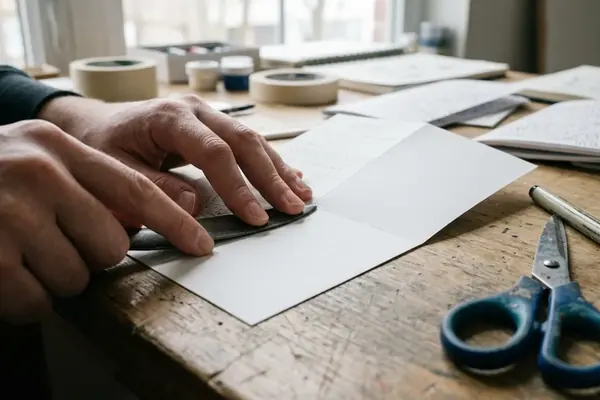
For mailing unframed prints, prepare acid-free protective sleeves, backing boards, rigid mailers, and corner protectors for larger sizes. Always include a clear packing insert with the shop name, order number, and care instructions.
Building Your Etsy Storefront
Sequence your storefront setup from account infrastructure to buyer-facing trust signals. Create the seller account, confirm billing and payout details, choose a shop name, upload branding, and add your listing inventory. A shop name should be checked before launch for exact spelling, social handle availability, and domain availability. Reserve the same spelling across the storefront, email sender name, and packaging insert within the same setup session.
Cohesive branding matters. Prepare a square shop icon at 500 x 500 pixels and a wide banner file sized for the platform's current display requirements. Test both on mobile before launch because most casual buyers see the shop header on a small screen first.
Write product titles with the searchable subject and format in the first 40 to 60 characters. Use phrases like "Botanical Art Print" or "Nursery Animal Illustration." Add size, color, room, or occasion terms only when they accurately describe the item. The Etsy Seller Handbook offers extensive guidance on optimizing these tags.
For each listing, include 7 to 10 images. Show the full print, a close crop, a scale reference, an accurate frame mockup, a packaging photo, a paper texture close-up, and a size chart for variants. Set processing times that match your actual workflow. A stocked linocut print can ship in 1 to 3 business days from a home studio. A made-to-order giclee print routed through an outside printer may need 5 to 10 business days before the parcel is even handed to the carrier.
Pricing Your Art for Profitability
Price from cost upward, then sense-check against perceived value. Calculate the non-negotiable costs first—materials, platform charges, payment charges, packaging, postage, and labor, then decide whether the market will bear the resulting retail price.
Use a line-item pricing sheet with columns for paper, ink or print cost, sleeve, backing board, mailer, label, platform listing charge, transaction charge, payment processing, postage, packing time, and creative-time recovery. A defensible base-price formula is: materials + packaging + platform charges + payment charges + shipping subsidy + labor minutes converted to hourly pay + profit margin reserved for reprints and damaged-package replacements.
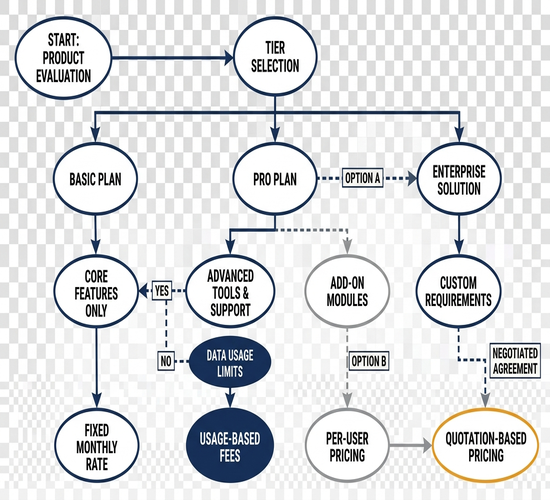
Note: A shop might price a print at $18 USD without counting the rigid mailer, backing board, payment charge, postage, and 12 minutes of packing time. The item may look affordable publicly while producing little or no usable profit.
The psychology of pricing art also involves the perceived value of limited edition prints versus open edition prints. For limited edition prints, document the edition size, numbering method, signature placement, paper stock, print dimensions, and whether artist proofs exist before the first sale. Changing those details mid-run weakens buyer trust.
If offering included shipping, test two price displays for the same margin target: item price plus separate shipping versus a higher item price with shipping included. Do the math using the farthest domestic zone the shop will serve, not the nearest buyer.
Driving Traffic to Your Shop
Treat the marketplace listing as the checkout page, not the whole marketing system. Simply listing items on a marketplace for handmade goods is not enough; external marketing is required. Plan the traffic path before launch. Use short-form posts for discovery, a blog or newsletter for warmer buyers, and community engagement for long-term retention.
For a first release, schedule promotion across a 9 to 14 day window. Share teaser process images 5 to 7 days before launch. Send a newsletter or publish a blog post 2 to 3 days before launch. Share product links on launch day, and post a reminder 2 to 4 days later featuring the best-performing image or a buyer question.
For short-form social posts, prepare 6 to 8 pieces of media before launch. Gather a sketch photo, a scanning or color-correction screenshot, a paper proof, a packaging test, a studio desk shot, a final product photo, and one personal caption explaining why the piece was made. Whether your work channels the educational warmth of Sesame Workshop or explores abstract geometric concepts, tell the story behind the visuals.
Quick Tip: A useful product-link caption includes the artwork subject, size, price, shipping region, and processing time in plain language. Avoid sending buyers to a generic profile page when a direct listing link is available.
Leverage an existing blog or email newsletter to announce shop updates and new print releases. Publish a shop-update post with 3 to 5 product images, a short making-of paragraph, a direct link to each listing, and a clear cutoff date for holiday or event-related delivery if relevant.
Understanding Platform Limitations
Relying solely on a third-party e-commerce platform comes with inherent limitations, such as a lack of customer data ownership. You do not own the email addresses of your marketplace buyers, making it difficult to market to them directly in the future.
Review your system after real orders arrive. Track which tasks consume studio time, which listings produce repeat questions, and which packages create support issues. Run the first shop review after 30 to 45 days of live sales or after the first 10 to 20 shipped orders, whichever comes first. Review profit per item, average packing time, damaged-package messages, unanswered buyer questions, and traffic sources.
Time your administrative tasks separately. Track listing creation, buyer messages, print proofing, packing, postage purchase, customs-form preparation for international orders, and replacement handling. Balancing time spent on administrative shop tasks versus actual creative illustration work is an ongoing challenge.
Consider expanding to an independent website when you have a repeat audience outside the marketplace, a growing newsletter list, frequent custom inquiries, or product pages that need richer storytelling than the marketplace listing format allows. While these methods provide a solid foundation, individual results depend heavily on your specific niche and audience engagement.
Keep in mind that this launch plan fits artists selling reproducible prints, stickers, cards, and small originals. High-value one-off paintings need insurance documentation, provenance records, collector communication, and shipping controls beyond this starter workflow. This advice is strongest for creators selling shippable paper goods and small art products from a home studio or small workspace.











Join the Conversation
Nothing here yet. Add your opinion.
Add Your Thoughts