
Executive Summary: The Low-Mess Creative
Creativity gets blamed for a lot of mess it never actually caused. The paint did that. The glitter did that. The creativity itself? It can run on a pencil and a scrap of paper.
This is the core move behind a low-mess creative routine: separate the act of making from the mess of certain materials. Once you treat drawing, printing, cutting, scanning, and noticing the world around you as legitimate creative work, the chaos becomes optional rather than mandatory.
The operating kit stays deliberately dry and bounded — colored pencils, markers, heat-shrink plastic sheets, a tray or small work surface, and a scanner for the finished pieces. That last tool matters more than people expect. Digitizing artwork preserves the memory without letting the fridge door collapse under a few hundred drawings.
The examples in this article come from a real creative household documented across a tight window: from a blog registered in October 2006 through a street-parade observation on April 8, 2007. Small window, but it shows the habits in action.
Summary: Contained materials plus a scanning routine give kids a real creative practice without surrendering your living room.
Shifting the Mindset: Art Beyond the Paint
Most parents picture art as something that requires a smock. Redefine it, and the whole project changes.
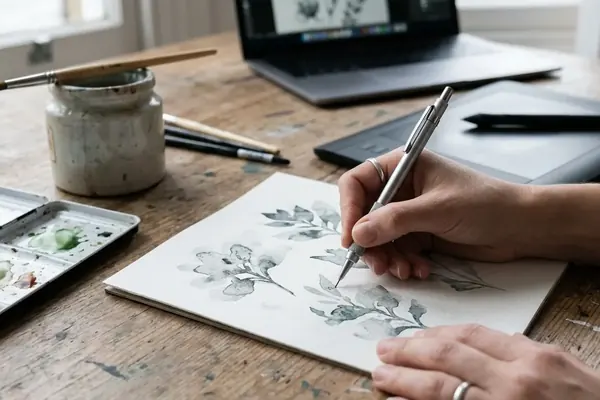
Art can be a repeated small act. A quick character sketch. A printed coloring page filled in over breakfast. A comic strip drawn on the back of an envelope. None of these need a drop cloth, and all of them build the same observation-and-expression muscles that messier projects do.
Steph, an artist and the author behind the blog these notes draw from, built her creative household on exactly this principle. The blog's domain was registered back in October 2006, and the early routine wasn't ambitious — it was consistent. Small drawings, regular printing, a tray for the day's work. Repeatable beats spectacular.

That consistency is the quiet engine here. The National Association for the Education of Young Children frames much of its guidance around fostering creativity in early childhood through everyday, accessible practice rather than grand projects. A pencil cup, a small paper stack, and a place to put finished work cover most of what a kid needs to start.
The practical test for any tool: can you stop in half a minute? Caps go back on markers. The tray gets carried to a shelf. Done.
Contained Crafts: The Magic of Shrinky Dinks
Here's where dry media earns its keep. Colored pencils and markers beat paints for quick sessions for one boring reason — they don't need water, and they don't need drying time. A kid can start, get interrupted, and walk away without leaving a puddle behind.
Heat-shrink plastic, the classic Shrinky Dinks kind, takes that containment a step further and turns it into something kids can wear. The workflow is tidy and repeatable:
- Draw the charm design on the plastic sheet.
- Color it with dry media.
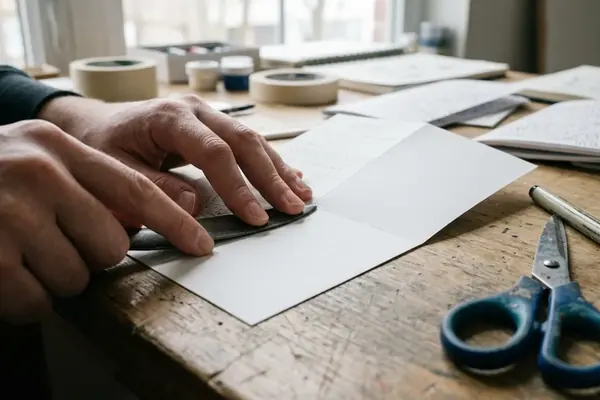
- Cut it out.
- Punch any hanging hole before heating.
- Bake on a lined tray according to the material instructions.
- Let it cool flat.
- Attach hardware if you're making jewelry.
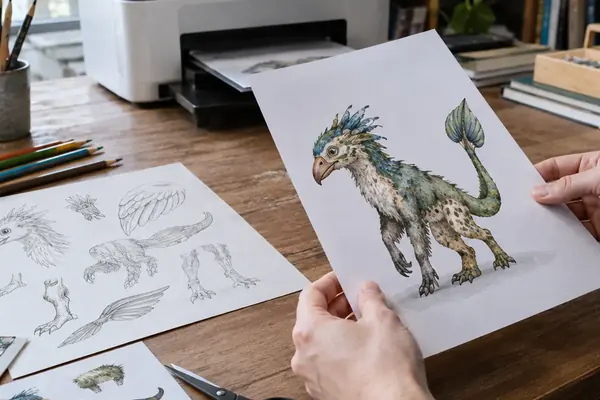
What makes this material genuinely interesting is that it doesn't stay in the kids' corner. Within that same 2006–2007 archive window, Steph used heat-shrink charms for an upcoming necklace line. So the same sheet that entertains a six-year-old also feeds a working illustrator's product. That's a rare overlap, and it tells you the medium has real range.
Quick Tip: Punch the hole before baking, every single time. After the plastic shrinks and hardens, you've lost your chance — and a charm with no hole is just a tiny coaster.
Going Digital: Scanning and Preserving Art
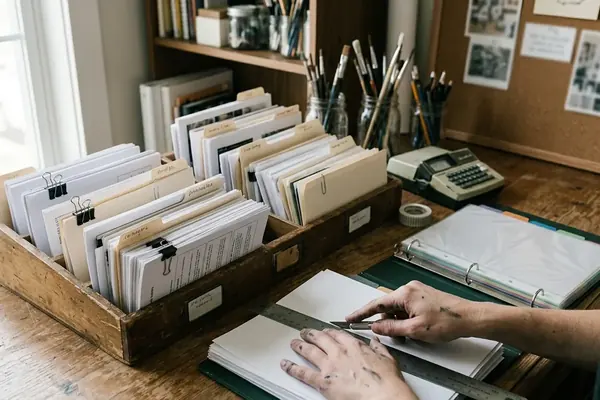
Sooner or later the drawings accumulate. A flat dry-media practice is generous that way — it produces a lot of paper. The fix isn't to make less; it's to keep the memory and release the object.
In this household, the turning point was hardware. On March 26, 2007, a Canon MP960 multi-function printer, scanner, and copier was delivered and set up, and routine art archiving became actually doable. Before reliable scanning, drawings just piled up. After, every piece had a path off the table.
The workflow stays simple:
- Place the artwork flat on the scanner glass.
- Scan the full page.
- Name the file with the child's name or initials plus the date.
- Save a second copy before you recycle or store the original.
That second copy is the part people skip and later regret. One backup turns a scanning session into actual preservation.
Note: Scanning works beautifully for flat drawings, comics, and paper crafts. Bulky collages, clay pieces, and textured paintings won't lie flat on the glass — photograph those instead and treat them as a separate archive.
Finding Inspiration in the Everyday
The cleanest creative prompt costs nothing and lives outside the supply bin. You just look at things.
The process is short: observe a scene, pick out the characters or details, then convert what you saw into a drawing, a caption, a comic panel, or a short story. Zero materials beyond a pencil. The world does the heavy lifting.
A concrete example from the source archive: the annual Easter dog parade on 2nd Street on April 8, 2007. A street full of costumed dogs is a prompt machine. Which dog is the villain? Who's the reluctant hero in the bee costume? Kids will narrate this faster than you can hand them paper.
Prompts also come off the bookshelf. Kurt Vonnegut's Slaughterhouse-Five — a war-and-time novel, sparks character and scene ideas for older kids. Paige Braddock's comic work in Jane's World shows how everyday people become drawn characters. Even an actor's face can become a reference for, say, a painted zebra. The point is that inspiration is everywhere and almost none of it requires cleanup.
The Reality Check: Boundaries of 'Mess-Free' Art
Let's be honest about the word "mess-free." Completely zero-mess creativity is a fantasy, and chasing it perfectly will just make you tense. The realistic goal is low-mess as the default, with wetter projects scheduled deliberately.
Physical boundaries do most of the work here. A designated clean-craft zone. One active tray per child. Markers capped when idle. Pre-counted supplies so nothing wanders. A landing spot for finished pieces before they get scanned or displayed. None of this is fancy; all of it reduces friction.
Low-Mess Kids' Creativity Setup
- Put dry media in one reachable container: pencils, markers, and a small paper stack.
- Use one tray or placemat as the project boundary before any supplies come out.
- For heat-shrink charms, punch holes before baking and keep an adult on oven and scissors duty.
- Scan finished flat work, name the file with initials and date, and save a backup copy.
- Reserve glitter, wet glue, and liquid dye for planned messy sessions with cleanup time built in.
One catch worth stating plainly: oven-heated plastic, small jewelry findings, sharp scissors, and scanning equipment all need adult hands. So this approach is low-mess, not child-unattended. The boundary keeps the floor clean; the supervision keeps the kid safe.
And glitter? Glitter, loose sequins, wet glue, and liquid dye simply don't behave like dry media. They need their own cleanup plan and shouldn't sneak into the everyday routine. Schedule them, enjoy them, then mop up — separately. That's the whole trick: keep the daily practice contained, and let the chaos happen on purpose.




Join the Conversation
Nothing here yet. Add your opinion.
Add Your Thoughts