
Finding Calm Through Creative Expression
Coloring is not an art exam. There is no judge, no gallery, no client waiting on a final draft. It is one of the lowest-barrier grounding activities you can keep in a desk drawer, and the only skill it asks for is the willingness to pick up a color and fill a shape.
That distinction matters. The pages below are built for quiet focus during a lunch break, a school pickup wait, or the slow stretch before bed. You are not performing. You are giving your hands something rhythmic to do while the rest of your nervous system catches up.
Summary: Ten free printable pages, designed for calm rather than show. Aim for a 10–15 minute first session. Print on US Letter (8.5 x 11), use the "actual size" setting, and choose a design by mood, not difficulty. Coloring is a helpful coping tool, not a replacement for professional care.
How to Download and Print
The flow stays simple, three steps and you're inking:
- Click the page title or download button to open the PDF.
- Save the file to your device.
- Print at 100% scale or "actual size" so the borders don't get cropped.
Each design exports for standard home printing on US Letter paper, with a printable margin kept inside the page edge. Most household printers will hold the full design without trimming the outer rings.
How We Selected These Stress-Relief Designs
Selection came down to one question: does this page feel comforting to color, or does it just look impressive in a thumbnail? Those are different things. A page packed with tiny repeated cells can photograph beautifully online and then turn stressful the moment it prints with faint lines, low ink, or on rough paper that snags pencil tips.
Line Weight and Open Space
Every page uses visibly distinct outlines, roughly in the 0.5–1.2 mm visual range when printed on letter paper. Thick enough to see, thin enough to stay elegant. The set also keeps generous open areas so your hand can relax instead of bracing for precision.
Repetition Meets Flow
The ten designs split intentionally. Mandalas, geometric patterns, typography, and a cityscape supply structure and rhythm. Ocean, botanical, woodland, swirls, celestial, and a koi-zen garden bring softer, sweeping movement. Pattern density stays mixed on purpose: larger fill areas around an inch or so across sit beside smaller repeated shapes, so no page is a wall of tiny cells.
Print Quality
Source files were exported at 300 dpi for letter-size PDF output. That resolution keeps outlines crisp on heavier paper, where faint or pixelated lines tend to disappear.
Understanding the Limits and Benefits of Coloring
Structured coloring is, at its core, a focused-attention activity. You repeat a motion, follow a contained shape, and the task occupies just enough of your mind to crowd out spinning thoughts. For some people that slow, repetitive motion may support a calmer physiological state.
The research here is specific, and worth reading carefully. In 2005, Curry and Kasser tested 84 undergraduate participants after inducing anxiety; each person colored a mandala, a plaid design, or a blank free-form page for 20 minutes. The structured mandala and plaid conditions produced greater anxiety reduction than free-form coloring. A 2012 replication by van der Vennet and Serice used the same 20-minute window and again found reduced anxiety after a mandala compared with a less structured task. You can read the original research regarding the effectiveness of coloring mandalas for the full methodology.
So if you want to test it yourself, use a 10–20 minute window and compare how you feel before and after.
Note: A 20-minute structured session has research support for short-term, self-reported anxiety reduction. That evidence does not mean coloring treats clinical anxiety. It is not a substitute for therapy, medical care, crisis support, or a treatment plan for persistent anxiety, depression, trauma symptoms, or panic attacks. If you're struggling, please reach out to a qualified professional.
10 Free Printable Coloring Pages for Mindfulness
The list alternates between structured and flowing designs so you can pick by mood and by what your hands feel like doing. Want a predictable path? Start center-out. Want to wander? Follow the long curves.
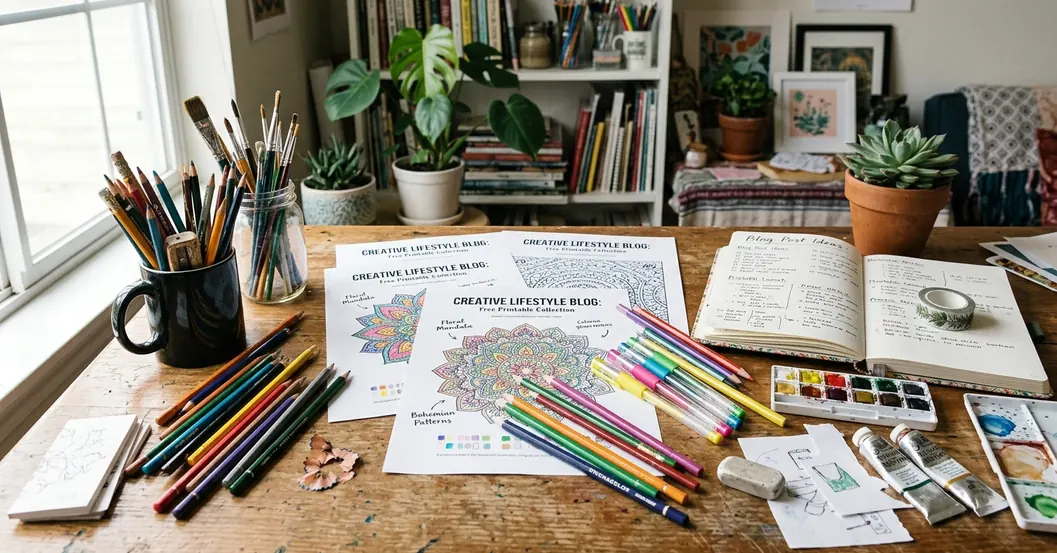
1. Intricate Mandala for Deep Focus
Radial symmetry with repeated rings gives you a predictable, center-out coloring path. The eye gets pulled inward, and the structure does the deciding for you, which is exactly the point on a frazzled afternoon.
2. Flowing Ocean Waves and Sea Life
Sweeping wave bands, shells, fish, and sea plants invite long curves instead of short enclosed shapes. Your hand glides rather than stops and starts.
3. Dense Botanical Garden Escape
Layered leaves, petals, stems, and small background details support nature-based grounding. No realistic color choices required, a purple fern is completely welcome here.
And the Rest of the Set
Rounding out the ten: a geometric page of repeating triangles, diamonds, and tessellated blocks for rhythmic back-and-forth coloring; a woodland scene with approachable foxes, rabbits, owls, or deer surrounded by mushrooms, leaves, and stars; plus typography, a cityscape, swirls, a celestial design, and a koi-zen garden. Structure on some pages, soft flow on others, so the whole set covers different moods and motor preferences.
Essential Supplies for a Frustration-Free Experience
Most coloring frustration traces back to four culprits: paper wrinkling, marker bleed-through, waxy pencil buildup, and colors looking dull. A little setup heads off all four.
Paper First
For pencils or gel pens, 65 lb cardstock is a sturdy starting point. It feeds through many home printers and feels far more substantial than standard copy paper. If you're using juicy markers, slide a scrap sheet behind the page even on cardstock, because ink can still transfer through pressure points or heavily layered areas.
Pencils vs. Markers
Your paper choice follows your tools. A reader using alcohol-based markers needs heavier paper and a backing sheet; a reader using colored pencils can usually manage with lighter cardstock and no bleed barrier.
- Soft-core colored pencils shine at blending, shading, and gentle hand pressure. Forgiving and quiet.
- Alcohol-based markers give smooth, saturated coverage, but they're more likely to bleed and feather on absorbent paper.
Test Before You Commit
One small habit beats all the others: test a 3–5 color palette on a trimmed scrap from the same printed paper before starting the final page. Wait a couple of minutes to see whether the ink spreads or darkens as it dries.
Quick Tip: Print one test page before batch-printing all ten, especially if you're switching from plain copy paper to heavier cardstock. One sheet now saves a stack of wrinkled regrets later.
Integrating Creative Rest Into Your Routine
The goal is not to finish a page. It's not to build a flawless palette or make something share-worthy. The goal is ten quiet minutes.
Pick a repeatable window, before bed, after lunch, or during a screen break, and treat coloring as a pause rather than a project. Use a simple stopping rule: color one ring, one corner, one animal, one word, or one background section, then set the page down when the timer ends. Unfinished is fine. The page will wait.
To make returning easy, bookmark this page or save the PDF folder so you can reprint a favorite without hunting for it again. Keeping two or three printed pages in a folder with pencils or markers means setup takes under two minutes, low enough to actually happen on a tired evening.
And let the lines be a little crooked. A wave that wobbles, a petal colored outside its outline, a mandala ring you got bored of halfway, those are not mistakes. They're proof you showed up for a few calm minutes, which was the whole idea.










Join the Conversation
Nothing here yet. Add your opinion.
Add Your Thoughts