
What Makes a Lunchbox Note Effective?
A confidence-boosting lunchbox note is more than a cheerful scrap of paper. It is a targeted psychological touchpoint placed where a child will encounter it during midday academic or social friction: before a spelling test, after an awkward recess, or on the day of a first practice.
Summary:
- Write 12–30 words tied to a real event, recent effort, or useful next action.
- Print and trim a five-day batch during one 15–25 minute weekend block.
- Add a nickname, doodle, joke, or piece of specific praise that fits the child.
- Store finished notes beside the lunch supplies, not near the printer.
In this Article
- What makes a lunchbox note effective?
- The Sunday batch-prep strategy
- Adding doodles, jokes, and targeted praise
- Building a five-day note rotation system
- Overcoming morning rush hurdles
- Start your first batch today
Trade “have a good day” for a usable cue
Generic encouragement is kind, but it gives a child very little to hold onto. “You’ve got this!” asks the reader to supply all the missing details. What is “this”? Which skill should they use? What happens if the hard part stays hard?
A more useful note connects encouragement to something occurring that day or within the next one to three school days. It might mention a presentation, friendship repair, tricky multiplication facts, or the courage required to walk into a new practice.
“You practiced the tricky six-times facts twice last night. If one question stalls you, breathe and do the next one.”
That message does three jobs without turning into a tiny lecture. It notices real effort, names the likely snag, and offers a next move.
Keep the finished note to one or two sentences, usually 12–30 words. A child should be able to read it in 10–20 seconds, tuck it away, and return to the glorious lunch-table business of negotiating cookie trades.
The Sunday Batch-Prep Strategy
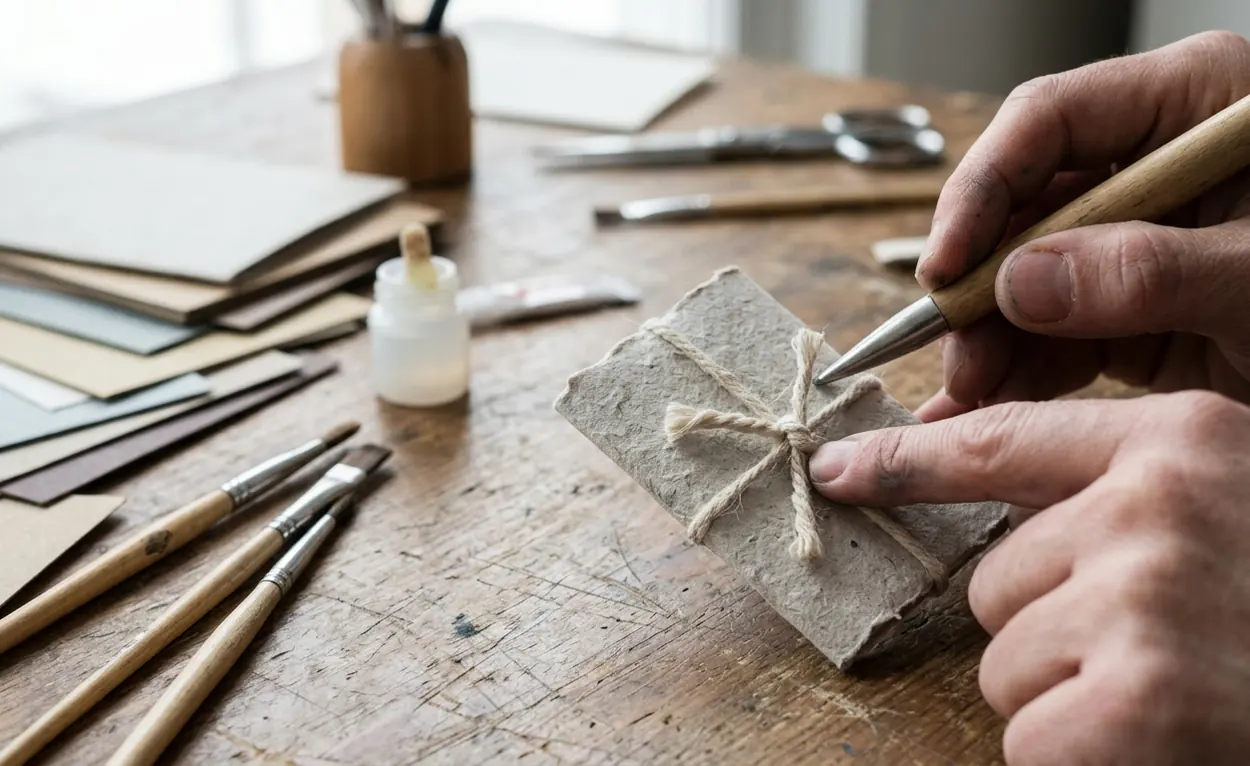
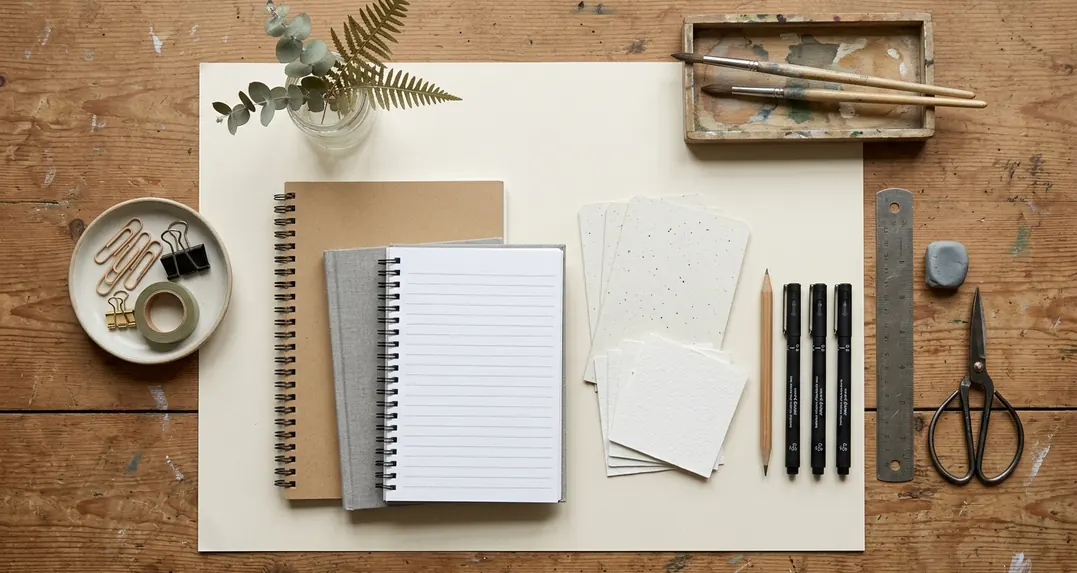
The strongest note-writing system is built around scissors, cardstock, and one protected weekend block. Choose a printable template, print enough cards for the next five school days, trim the whole stack, add names, and move the finished cards directly to the lunch-packing area.
Print for durability, not just convenience
Standard printer paper works in a pinch, but lunchboxes are damp little ecosystems. Condensation from an ice pack can wrinkle a thin note before lunch begins. Use 65–80 lb cover cardstock, roughly 176–216 gsm, after confirming that the printer accepts the selected weight.
For a template with eight cards per sheet, three sheets produce 24 notes. That covers four five-day school weeks and leaves four spares. A ruler and craft knife will do the job, though a paper trimmer makes straight cuts much less fussy. Cutting three printed sheets takes about 5–10 minutes.
A compact weekend workflow
- Reserve a 15–25 minute block once each weekend.
- Print the selected templates on cardstock.
- Trim every card in the batch before putting away the cutting tools.
- Add names and any weekday-specific details.
- Stack the notes in order and store them beside the lunch supplies.
Note:
This system works best when the batch is completed weekly. Trying to print, trim, personalize, and clean up on a chaotic Tuesday morning adds enough friction that the note is likely to disappear from the plan.
The common trap is a stack of printed sheets left beside the printer. The project looks nearly finished, but the unresolved trimming step still stands between the paper and the lunchbox. Finish the cuts in the same session.
Adding Doodles, Jokes, and Targeted Praise
Pre-printed notes provide the structure. One handwritten detail supplies the sparkle.
Personalization does not require an elaborate illustration or a freshly composed comedy routine. Allow 15–45 seconds per card for a nickname, speech bubble, smiling taco, inside joke, or short handwritten line. The mark simply needs to show that this card was chosen for this child on this day.
Praise the observable choice
“You’re amazing” feels lovely, but targeted praise tells a child what they did well and which behavior they can repeat. It shifts attention from a broad identity label to a concrete action.
“Inviting Maya into yesterday’s game was thoughtful. You can use that same brave voice at recess today.”
The note names a specific social choice, then carries it into the next situation. For an academic challenge, mention the practice the child already completed and offer one manageable response if they get stuck. The goal is not to promise an easy day. It is to remind them that they already have a tool they can use.
Let humor release a little pressure
A ridiculous doodle or short joke can interrupt the tension around a test, presentation, or complicated friendship moment. Keep jokes to one or two lines. If the child enjoys a reveal, put the punchline on the back or hide it beneath a small folded flap.
This light touch fits the broader role of research on positive reinforcement: reinforcing a constructive behavior works best when the response connects clearly to that behavior. On a lunchbox card, specificity matters more than decorative polish.
Quick Tip:
Match the visibility to the child. One child may adore a giant cartoon banana. Another may prefer a folded, name-only message that can be read privately. Personalization includes how the note is presented, not only what it says.
Building a Five-Day Note Rotation System
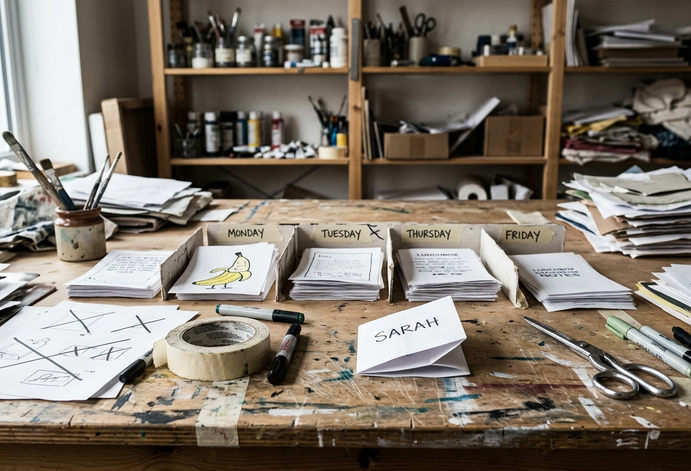
A fixed weekday theme removes the blank-card stare. Instead of inventing any possible message, the parent chooses from one narrow category and moves on.
Monday through Friday, one prompt at a time
- Motivation Monday: Recognize effort and name one next action. Keep the message under 30 words.
- Trivia Tuesday: Share one compact fact, with the answer kept under 15 words so it fits the card.
- Wacky Wednesday: Add a harmless joke, peculiar doodle, or silly question.
- Thoughtful Thursday: Notice kindness, patience, repair, or courage in a recent situation.
- Funny Friday: Finish the week with an inside joke or punchline hidden on the back.
Prepare all five cards during the same 15–25 minute weekend session, then stack them Monday through Friday. The structure balances direct emotional support with lighter moments. A child does not need a pep talk every day, and a stream of jokes can miss the moment when reassurance would help more.
Trivia and joke cards can follow a four- to six-week cycle before repeating. Personalized praise may recur sooner because its details change. “That was brave” becomes much more meaningful when the note names whether bravery looked like asking a question, joining a game, or trying again after a mistake.
A sample week built around one real concern
Suppose a child has a class presentation on Thursday. Monday can recognize rehearsal effort. Tuesday’s fact can relate to the presentation topic. Wednesday can feature a nervous-looking doodle with an absurd speech bubble. Thursday’s note can offer a short breathing cue before speaking. Friday can celebrate finishing the task without grading the performance.
The theme changes each day, but the week still feels connected. That rhythm is the useful part: steady support without making every lunch feel like a performance review.
Overcoming Morning Rush Hurdles
Forgetting a note is usually a placement problem, not a motivation problem. If finished cards live in an office drawer while lunch bags live in the pantry, the routine asks a rushed adult to remember an extra trip at exactly the wrong time.
Put the backup where the action happens
Keep a labeled envelope of pre-cut, pre-signed cards directly inside the pantry bin, drawer, or basket used for lunch packing. Place five ready cards at the front. The envelope should sit beside lunch bags, napkins, or reusable containers so selecting and packing a card takes only 10–20 seconds.
Stock the envelope with 5–10 emergency notes, including several that do not name a weekday. An undated “I noticed how patiently you worked on that project” card can rescue a morning without pretending it was written specifically for Wacky Wednesday.
- Check the envelope between Friday afternoon and Sunday evening.
- Refill it whenever the ready-card count drops below five.
- Move newly personalized weekday cards to the front.
- Keep undated backups behind the current stack.
Running out of templates is another predictable snag. The three-sheet batch solves that problem only when the cards are fully cut and stored. Printed-but-uncut sheets are supplies, not ready notes.
Quick caveat:
Missing a day is normal and does not erase the value of the weekly routine. Skip the guilt, pack the next prepared card, and refill the envelope during the next weekend block.
That distinction keeps the habit pleasantly ordinary. A lunchbox note should support family life, not become one more morning task wearing a tiny paper crown.
Start Your First Batch Today
The first batch needs to move from screen to pantry before it can become a routine. Set aside 20–30 minutes from download through final storage. Gather the printer, cardstock, cutting tool, pen, and one envelope before starting.
Make the first set
- Download one preferred printable template right now.
- Load three sheets of 65–80 lb cover cardstock, roughly 176–216 gsm, and confirm the printer paper setting accepts that weight.
- Print the batch and make the first cuts before the day ends.
- Write the child’s name on five cards and assign one to each weekday theme.
- Prepare two to five undated backup cards.
- Place the finished stack in an envelope beside the lunch bags or containers.
Download the template now, load those three sheets, and cut the first five cards before putting the printer away.












Join the Conversation
Nothing here yet. Add your opinion.
Add Your Thoughts